ServicesWindshield Protection Film
Windshield Protection Film in West Sacramento
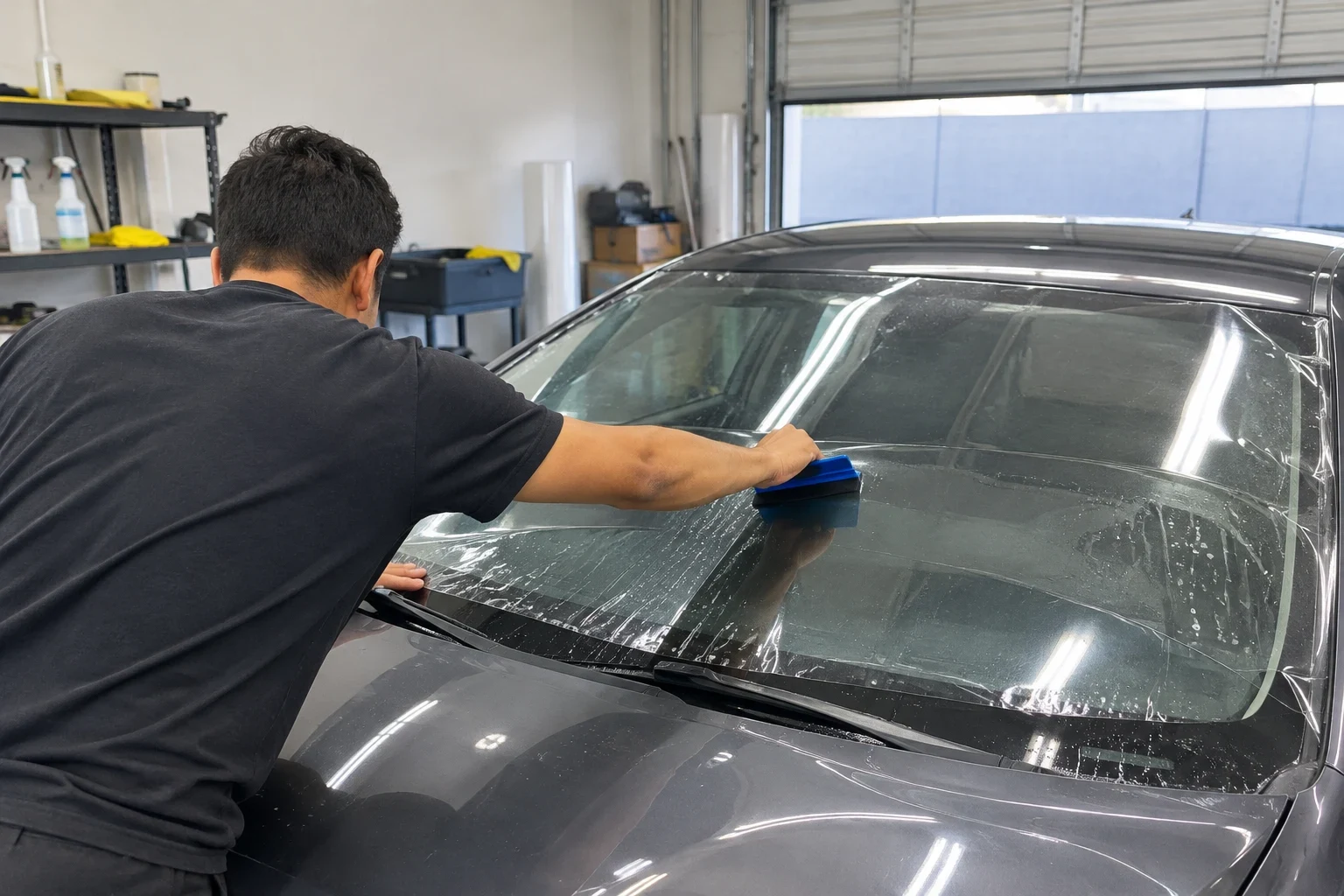
We install a clear film on the outside of your windshield that absorbs rock hits, sand and road grit before they reach the glass. You talk to one person from the first call to pickup, and you drive away with glass that's guarded and still easy to see through.
What Windshield Film Does
Windshield protection film is a thin, optically clear layer applied to the outside of the glass. When a rock flies off a truck tire, the film takes the impact. Often there's no mark at all. Sometimes the film gets a scuff or a small dent you can replace later. Either way, it's far cheaper than a new windshield, and on a lot of newer cars a new windshield also means recalibrating the cameras behind it.
It's not window tint. The film is clear and doesn't darken the windshield. Some films add UV protection and a bit of heat rejection, and we'll tell you plainly which ones do and how much difference you'll actually feel.
It makes the most sense on new or nearly new cars, vehicles with expensive camera-equipped glass, and anyone who puts real freeway miles on behind gravel and construction trucks.
What's Part of the Install
- A close look at the glass first
- We check the windshield in good light for chips, cracks and pitting. Film over an open chip can trap dirt and moisture, so we'll tell you if a repair should happen first.
- Deep cleaning and decontamination
- The glass gets washed, clayed and wiped down so nothing is sealed under the film. Any speck left behind shows up as a bump later.
- Film cut to your windshield
- The film is trimmed to fit your glass and laid on in one piece. Edges are finished so they sit flat and don't catch on the wipers.
- Care around cameras and sensors
- Many cars have lane cameras and rain sensors behind the windshield. We keep the film clean and bubble-free in that zone and check that the systems read normally before you leave.
- Walkthrough at pickup
- We show you the finished glass, explain the curing time and go over washing and wiper care. Same person you started with.
Signs It's Worth Adding Film
You just replaced a windshield
If you paid for new glass and camera recalibration once, you know the cost. Film helps keep it from happening again.
Your glass is collecting tiny pits
Small pits catch the sun and oncoming headlights, which makes night driving harder. Film on fresh glass slows that wear down.
You drive a lot of freeway miles
Daily commutes behind trucks mean steady rock hits. Long drives toward Davis or Elk Grove add up fast.
You bought a new car and want it to stay that way
Lots of owners pair windshield film with paint protection film on the front end. Both take the hits from the same road debris.
Your windshield is costly to replace
Heated glass, heads-up displays and driver-assist cameras raise the price of a new windshield. Film costs a fraction of that.
Where the Cost of Windshield Film Comes From
Your quote is built around your car, since no two windshields take the same amount of film or time. Glass size and shape, plus whatever is mounted behind it, make the biggest difference. We give you the number before any work begins, and if something could change it, we tell you up front.
How big and curved the glass is
A tall, deeply curved windshield on a truck or SUV uses more film and takes longer to lay down flat than the smaller glass on most sedans.
What sits behind the windshield
Lane cameras, rain sensors and mirror mounts all need slow, careful work so the film around them stays clean and clear.
Which film you pick
A plain impact film is the lower-cost choice. Films that also add UV protection and heat rejection cost more, and we'll explain what each one does so you only pay for what you'll use.
The shape your glass is in now
Open chips, a lot of pitting or old film that has to be stripped off before we start all add time to the job.
How Your Day at the Shop Goes
- 1
Quote by phone
You call and tell us the year, make and model. We ask about cameras, sensors and any chips, then give you a quote and a time to bring the car in.
- 2
Drop-off and inspection
You bring the vehicle to our shop. We walk around the windshield with you and point out anything we see before work starts.
- 3
Prep and install
The glass is cleaned and decontaminated, then the film goes on and is squeegeed out. Most of the day is careful prep, because that's what makes the film look right.
- 4
Check and pickup
We look at the glass from the driver's seat in daylight, confirm the cameras and wipers work as they should, and clean up the car. Then we hand you the keys and go over care.
Windshield Film Questions
Will I see the film when I'm driving?
On a clean install, most drivers stop noticing it within a day. The film is optically clear, not tinted. You may see a faint edge line if you look for it, but it shouldn't affect your view of the road.
Does it stop every chip and crack?
No, and we won't tell you it does. It handles the everyday stuff well: small rocks, sand and grit. A large rock at highway speed can still damage the glass, though the film often keeps the hit smaller.
How do the wipers affect the film?
Wipers slowly wear the surface, more so with dirty blades or a dry windshield. The film is meant to be the part that wears instead of your glass. When it gets hazy or scuffed, we can remove it and put on a new piece.
Will it interfere with my lane assist camera?
It shouldn't when it's installed correctly. We keep the camera area free of bubbles and debris and check that the systems work before you pick up the car. If something reads oddly, we deal with it before you leave.
Is this legal on a windshield in California?
California limits how dark a windshield can be, and clear protection film is a different product from tint. Ask us about the specific film on your call and we'll explain what California allows and what we'd put on your car.
How long until I can wash the car?
Give the film a few days to cure before a car wash or a hard scrub on the glass. Light wiper use is fine. We'll go over the details at pickup.
Keep the Next Rock Off Your Glass
Call and tell us what you drive. The same person who answers will set up your install, handle the work at our shop and walk you through the finished windshield.